Lead scoring is a topic that people tend to have strong opinions about. Chances are you either see it as a must-have or a waste of time.
There is some data to suggest it’s worth our attention. For example, research from Duct Tape Marketing shows organizations implementing lead scoring systems see their lead generation ROI increase by 77%.
In my experience, it’s produced mixed results. In some instances, it has clearly helped to prioritize quality leads. In others, it ends up being of limited use. But I’ve always thought it’s a tool that will deserve more of our attention as the technology behind it improves. So, I was excited that among HubSpot’s product announcements at INBOUND last year was a new lead scoring tool.
We’ve had a chance to put this scoring model to work, and it’s fair to say it’s a real step forward. Bottom line: if you’re still using HubSpot’s legacy lead scoring tool, you’re missing out on new features that could significantly improve your lead qualification process.
The new fit and engagement lead scoring model is both an upgrade and a reimagining of how we evaluate and prioritize leads. In this article, we’ll dig into why you should make the switch to the new lead scoring tool and how to do it effectively.
(Note: The lead scoring feature is available in Marketing Hub Pro and Enterprise.)
The Legacy HubSpot Lead Scoring Tool: A Quick Recap
With the old lead scoring tool, you’d assign points based on various criteria, ending up with a single number that was designed to help you quickly gauge a lead’s quality. While this system was better than no scoring at all, it left us wanting more. Was that 80-point lead truly sales-ready, or was that actually a competitor that downloaded every white paper on your site?
The traditional model combined everything into one score: demographic data, firmographic information and behavioral signals all merged into a single number. This one-dimensional approach made it difficult to distinguish between truly qualified leads and highly engaged researchers who would never buy – or highly qualified leads that weren’t engaging.
Enter Fit & Engagement Scoring
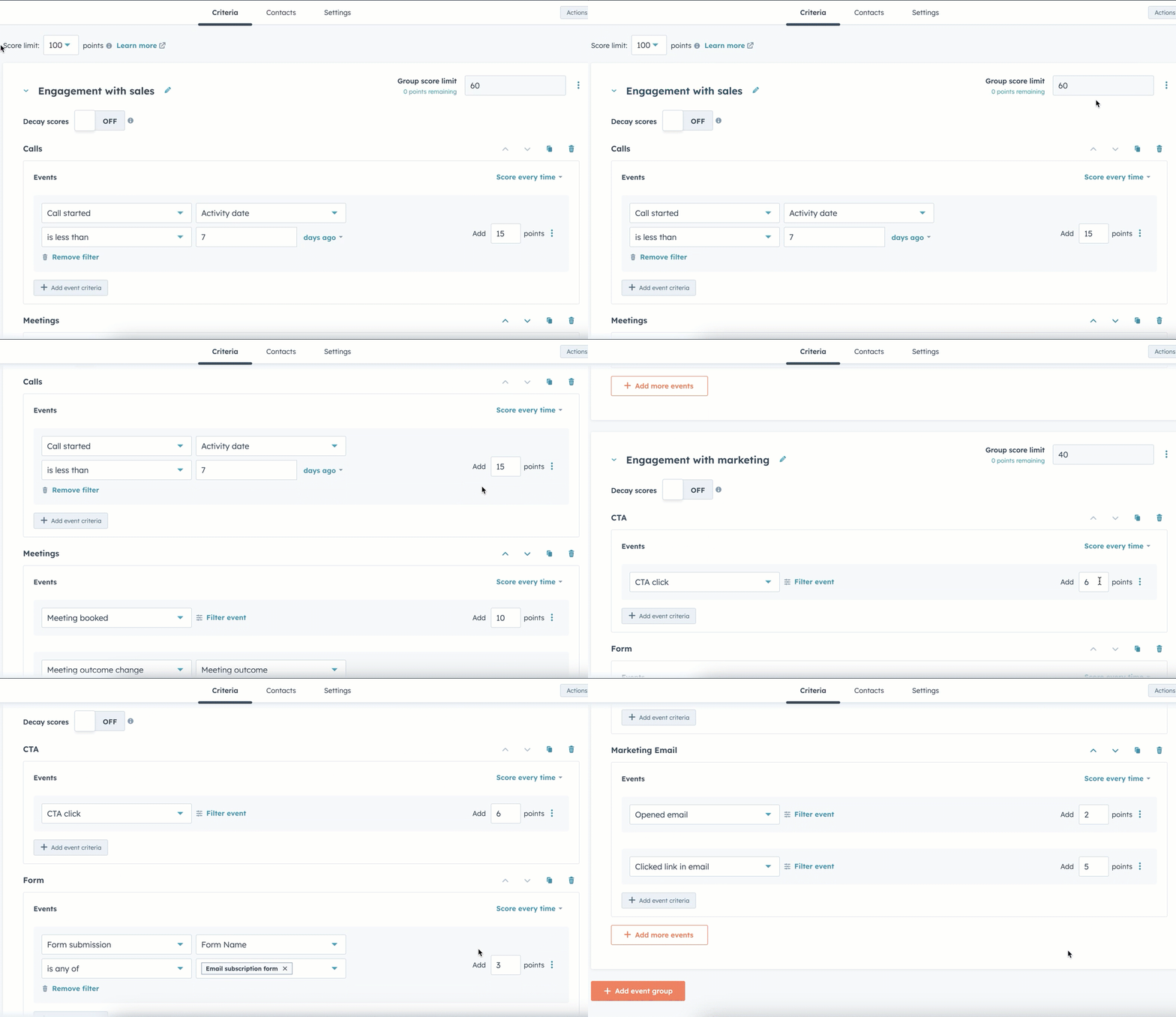
HubSpot’s new lead scoring system splits your evaluation into two distinct scores: fit and engagement. This separation is helpful for several reasons.
Fit scoring focuses on how well a prospect matches your ideal customer profile. Think company size, industry, annual revenue and other unchanging characteristics that indicate whether a company could benefit from your solution. A high fit score means the prospect looks like your best customers on paper.
Engagement scoring, on the other hand, tracks how interested a prospect appears to be in your company. This includes website visits, email interactions, form submissions and other behavioral signals that indicate buying intent. A high engagement score suggests active interest in your offerings.
Why Two Scores Are Better Than One
This dual-scoring approach solves several critical problems:
First, it helps you identify “diamond in the rough” opportunities – i.e. companies that perfectly match your ideal customer profile but haven’t engaged much yet. With the old system, these high-potential prospects might have been overlooked due to low engagement. Now, you can proactively target these high-fit, low-engagement leads with targeted nurturing campaigns.
Second, it prevents your sales team from wasting time on poor-fit prospects who show high engagement. This is the lead who downloads everything but works for a company that could never use your product or service. Many of our clients find that the time spent on these low-value leads add up to a major challenge. The new system makes these situations immediately apparent.
Third, it provides clearer guidance for sales and marketing actions. A lead with high fit and high engagement scores is ready for direct sales outreach. A high-fit, low-engagement lead needs nurturing. A low-fit, high-engagement lead might be a good candidate for your self-service offering or should be directed to a more appropriate solution.
| Fit Score | Engagement Score | Recommended Action |
| High | High | Immediate sales outreach |
| High | Low | Marketing nurture campaign |
| Low | High | Direct to self-service or alternative solution |
| Low | Low | Deprioritize |
Score Thresholds
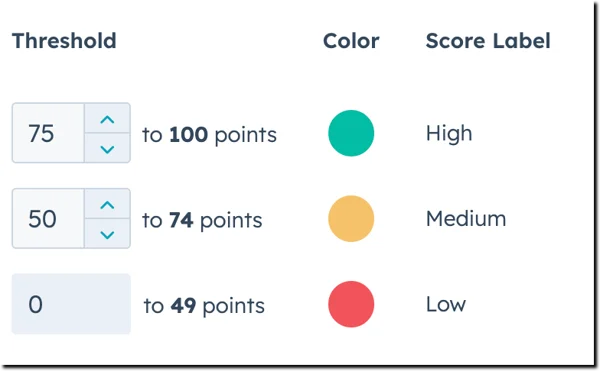
To easily see scores by category, the new scoring also includes a score threshold that categorizes your records by label. The labels are High, Medium, and Low. As an example, you might set 0-49 as Low, 50-74 as Medium, and 75-100 as High.
The Power of Flexibility
Beyond the basic two-score model, the new system offers unprecedented flexibility:
- Create multiple scoring models for different business units or product lines
- Adjust scoring criteria based on market segments or territories
- Fine-tune weights more precisely for both fit and engagement factors
- Set up automated workflows based on score combinations
This flexibility means you can finally accommodate the complexities of your business within your lead scoring system, rather than forcing everything into a one-size-fits-all model.
Getting Started with the New System
Ready to make the switch? Here’s your roadmap:
- Audit Your Current Scoring Model
- Document your existing criteria and their effectiveness
- Separate current criteria into fit versus engagement categories
- Note which factors have been the best predictors of success
- Set Up Your New Scoring Properties
- Create your fit scoring criteria first, focusing on unchanging characteristics
- Establish engagement scoring parameters, emphasizing recent activities
- Define thresholds for lead qualification based on both scores
- Migrate Your Data
- Export your existing lead scores for reference
- Apply new scoring criteria to your database
- Review initial results and adjust as needed
- Train Your Team
- Hold separate sessions for sales and marketing teams
- Create clear guidelines for lead handling based on score combinations
- Establish a feedback loop for continuous improvement
Best Practices for Success
As you implement the new system, keep these tips in mind:
- Start with conservative scoring criteria and adjust upward based on data
- Focus engagement scoring on recent activities rather than historical data
- Create clear documentation for score interpretation and required actions
- Monitor and adjust your thresholds based on sales team feedback
- Regularly review and update your scoring criteria as your business evolves
Making the Transition
The switch to the new scoring system doesn’t have to happen overnight. Consider running both systems in parallel for a short period to ensure your new criteria are properly calibrated. This approach allows you to fine-tune your new model while maintaining business continuity.
While the transition to HubSpot’s new fit and engagement scoring system requires some effort, the improved insights and flexibility make it well worth the investment. The sooner you make the switch, the sooner you can start providing your sales team with clearer, more actionable lead intelligence.
Ready to get started? Log into your HubSpot portal, navigate to the Marketing menu, and look for the Lead Scoring at the bottom of the menu items. Need a hand? We’re here to help.